
April 3, 2025
Skincare Trends: What to Embrace & What to Avoid for Radiant Skin

Quick answer: In 2025, the most beneficial skincare moves include simplifying your routine with gentle, hydrating products, incorporating movement that supports overall health, and prioritizing sleep for collagen production and skin recovery. Trends to approach with caution include overfilled filler looks and TikTok-driven aggressive exfoliation. At Allure Infinite Beauty, thorough consultations help clients build personalized skin journeys based on individual concerns rather than fleeting trends.
Hello, skincare aficionados!
As we journey through 2025, the skincare realm is a buzz with innovations and trends at Allure Infinite Beauty, we love leaning & growing with all the new technologies and trends!
At Allure Infinite Beauty, we pride ourselves in our thorough consultations to go over your beauty concerns, do a deep dive into your skin health and put a journey together for you to help you achieve the skin of your dreams!
While some offer promising benefits, others may not be as effective as they seem. Let’s dive into the skincare trends to consider and those to approach with caution.
Trends to Embrace
1. Simplified Skincare Routines: In 2025, the emphasis is on simplicity. Opt for minimalistic routines that focus on hydrating and gentle products, steering clear of harsh chemicals and aggressive exfoliation and TikTok trends. This approach promotes healthy, radiant skin without overwhelming it.
2. Functional Movement Practices: Engaging in exercises that mimic daily activities, such as walking and body weight exercises, enhances overall functionality and mobility. Incorporating these into your routine supports long-term health and wellness. How we treat our body is a direct reflection in our skin, AKA our largest organ!
3. The Importance of Sleep for Your Skin: Prioritizing sufficient sleep contributes significantly to overall skin health and appearance. Key benefits include: collagen production, skin hydration, and reduced skin inflammation.
Trends to Approach with Caution
1. Overfilled Faces: While we are filler advocates here at Allure Infinite Beauty, we encourage our clients to avoid excessive use of fillers to prevent an overdone appearance and maintain facial expression.
2. Skincare Overconsumption: Using an abundance of products doesn’t necessarily equate to better results. In fact, overloading your skin with products can lead to irritation and diminished effectiveness, and a broken skin barrier.
3. Over-Promising Skincare Products: Be wary of products that claim to deliver miraculous results on social media. It’s essential to ask trusted skincare experts and to understand that skincare improvements often require consistent and realistic efforts.
Emerging Technologies in Skincare
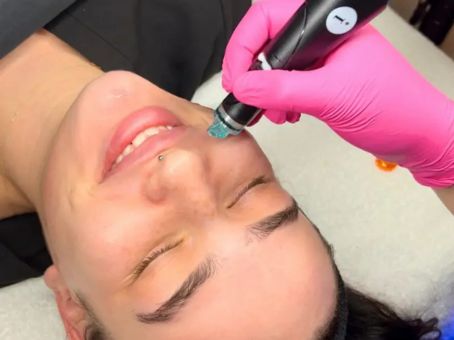
Microneedling Innovations: Advancements in microneedling, combined with radiofrequency technology, are gaining attention for its potential to improve skin texture and firmness.
Co2 Laser Resurfacing Treatments: Co2 is a cutting-edge treatment designed to rejuvenate the skin by targeting imperfections such as wrinkles, scars, and sun damage.
Remember, the world of skincare is vast and ever-evolving. It’s essential to stay informed, choose products that align with your individual needs, and consult with skincare professionals when making significant changes to your regimen. Until next time, here’s to healthy, glowing skin!
Love,
The Allure Infinite Beauty Family
The content on this page is for informational purposes only and does not constitute medical advice, diagnosis, or treatment. Individual results vary. All procedures and treatments at Allure Infinite Beauty are performed by or under the supervision of licensed medical professionals. Please consult a qualified healthcare provider before beginning any aesthetic or wellness treatment to determine whether it is appropriate for your individual needs and health history.
Frequently Asked Questions About Skincare Trends and Evidence-Based Care
How do I know if a skincare trend is backed by real science?
The best way to evaluate a skincare trend is to look for peer-reviewed clinical research, not just before-and-after photos or influencer testimonials. Look for randomized controlled trials or systematic reviews when available. Established ingredients like retinoids, niacinamide, hyaluronic acid, vitamin C, and alpha hydroxy acids have decades of clinical data. Novel trends may be promising but often lack the long-term evidence to support the claims made about them. Consulting a licensed esthetician or dermatologist is the most reliable shortcut to separating effective ingredients from marketing.
Which current skincare trends are worth embracing?
Several current skincare trends are well-supported by evidence. Skin barrier repair — focusing on ceramides, fatty acids, and gentle cleansers rather than aggressive stripping — is backed by strong research and represents a meaningful shift away from over-exfoliation culture. Peptide-rich formulations are gaining evidence for collagen support. Microbiome-aware skincare (probiotic and prebiotic formulations) is an evolving area with promising early data. Broad-spectrum mineral sunscreen for daily use remains the most evidence-backed anti-aging investment and never goes out of style.
What skincare trends should I avoid or approach with caution?
DIY skincare trends — at-home chemical peels with high-concentration acids, at-home microneedling with consumer dermarollers, and skin icing or slugging with occlusive layers — carry meaningful risks of irritation, infection, or barrier damage when done without professional guidance. Trends that promise dramatic results from a single product or ingredient are almost always overstated. ‘Natural’ or ‘clean’ skincare is not inherently safer or more effective — the evidence base matters more than ingredient origin. Avoid trends that require abandoning your established, effective regimen for something unproven.
Why does trending skincare advice on social media often conflict with professional recommendations?
Social media content is optimized for engagement rather than accuracy. Dramatic transformations and bold claims perform well algorithmically, even when the underlying claims are incomplete, misleading, or simply wrong. Licensed skin professionals must base recommendations on clinical evidence, individual skin assessment, and established professional standards. This means a licensed esthetician or dermatologist may recommend something far less dramatic than what a trending video promises — but far more likely to actually work safely for your specific skin.
How often should I update my skincare routine?
A well-designed skincare routine does not need frequent updating. Effective skincare takes consistency over time — most ingredients require four to twelve weeks of daily use before their full effect is visible. Constantly swapping products or chasing new trends interferes with your skin’s ability to show results and makes it difficult to identify what is actually working. Review your routine with a skin professional once or twice per year to assess progress and make deliberate, evidence-based adjustments based on your skin’s changing needs and seasonal factors.
Navigating Skincare Trends in 2025: Questions We Hear Most Often
What is skin cycling, and is it worth trying?
Skin cycling is a structured rotation of active ingredients — typically alternating between a retinoid night, an exfoliation night, and two recovery nights — designed to maximize efficacy while giving the skin barrier time to recover. For many people, it represents a smarter way to use powerful actives without the chronic over-exfoliation that leads to sensitivity and dryness. It’s a trend worth exploring if you’ve struggled with irritation from daily actives, though the ideal cycle varies by skin type and the specific products you’re using. A personalized plan will serve you better than following a generic schedule.
Is “slugging” — coating skin in petrolatum overnight — actually beneficial?
Slugging involves applying a thin layer of an occlusive product like petroleum jelly as the final step in your nighttime routine to lock in moisture and allow barrier repair while you sleep. For people with very dry or compromised skin barriers, it can be genuinely helpful. For acne-prone or congestion-prone skin, heavy occlusives may not be well-tolerated. As with most trends, the value depends on your skin type. A lightweight alternative for those who love the concept but dislike the texture is a ceramide-rich moisturizer, which provides similar barrier sealing without the heaviness.
What’s the deal with “glass skin” — is it achievable without filters?
Glass skin refers to an appearance of extreme clarity, hydration, and reflectivity. While social media versions are heavily filtered, the underlying goal — deeply hydrated, even-toned, smooth skin — is absolutely achievable with the right routine and professional support. Layering hydrating toners, essences, and serums consistently, combined with regular professional treatments, can meaningfully improve skin clarity and texture over time. The key is accepting that real glass skin is a long-term project, not a product you buy once.
Are at-home LED devices worth the investment?
At-home LED devices, particularly red and near-infrared light panels, have legitimate science behind them — red light may support collagen production and reduce inflammation at certain wavelengths and durations. However, consumer devices tend to deliver lower energy output than professional equipment, which means results are more modest and require consistent long-term use. They’re generally safe for home use and can complement a professional treatment schedule, but they’re unlikely to replace in-office laser or light-based services. If you’re curious, ask our providers for an honest comparison at your next visit.
Which skincare ingredients should I be skeptical of in 2025?
Be cautious about any single ingredient marketed as doing everything. The word “microbiome” gets attached to many products without much clinical support for the specific formulations. “Clean beauty” as a term has no regulatory definition, which means it signals very little about actual effectiveness or safety. And any product promising dramatic, overnight results likely relies on temporary optical effects — like silicones smoothing texture temporarily — rather than genuine skin change. The ingredients with the strongest evidence remain the boring ones: retinoids, SPF, niacinamide, vitamin C, and ceramides.
What skincare trends do you actively recommend at Allure?
We’re enthusiastic about the broader cultural shift toward barrier-first skincare — prioritizing skin health over chasing trends. We also embrace personalized, data-informed treatment planning rather than following one-size-fits-all protocols. Professional treatments like HydraFacial, laser resurfacing, and growth factor therapies have genuine, well-documented mechanisms and a strong track record. We believe the best “trend” is working with a licensed provider who knows your skin rather than experimenting alone based on social media. Our team at Allure loves these conversations — come see us for a consultation.
How do I know if my current skincare routine is actually working?
Consistent photography is the most honest tool. Take a weekly photo in the same lighting for two to three months. Visible changes to texture, tone, and hydration should become apparent over that window if your products are genuinely working. If you notice no change — or if your skin seems more reactive, drier, or congested than before — it’s worth reassessing. Our licensed providers at Allure offer routine reviews and can recommend adjustments or add professional treatments to accelerate progress. Explore our full skin care services to see what’s available.
Should I follow a ten-step routine or is simpler actually better?
The evidence strongly supports a focused, consistent routine over a maximalist one. More steps mean more opportunities for ingredient conflicts, irritation, and compliance failure. A well-designed four to six step routine — cleanser, active serum, moisturizer, and SPF in the morning; cleanser, active or treatment serum, and moisturizer at night — outperforms a ten-step routine that gets skipped half the time because it feels overwhelming. Where professionals add real value is in identifying the two or three highest-leverage ingredients for your specific concerns rather than adding everything in hopes that something sticks.
The best skincare strategy is the one that’s built for your skin — not the one trending online. Book a personalized skin consultation at Allure Infinite Beauty in Mesa, AZ, and let us help you filter out the noise.